
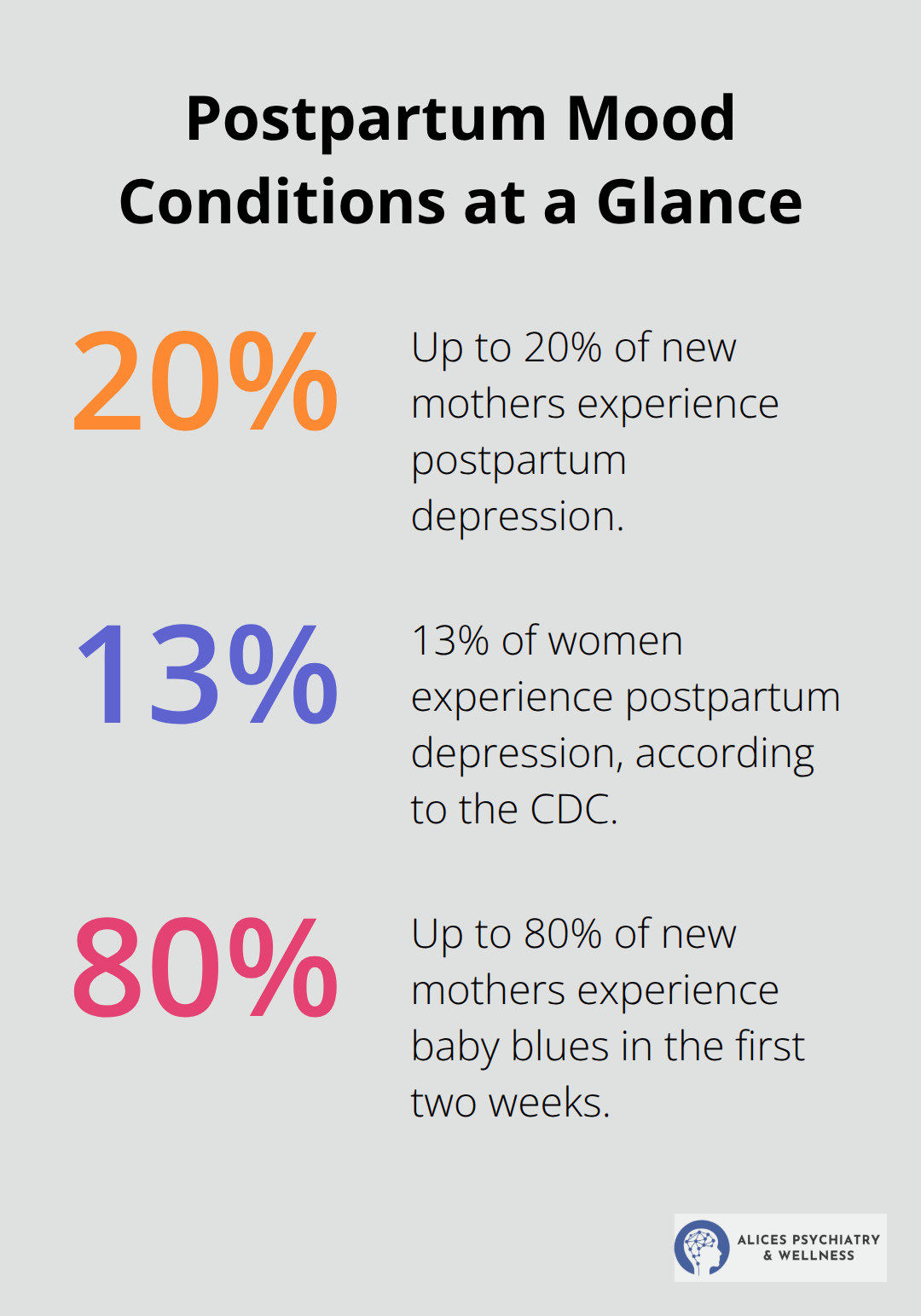
Postpartum depression affects up to 20% of new mothers, yet many struggle to find the right professional support. The symptoms can feel overwhelming and isolating.
We at Alice’s Psychiatry and Wellness understand that choosing a postpartum depression therapist is a significant decision that requires careful consideration. The right therapeutic match can make all the difference in your recovery journey.
What Signs Show You Need Professional Help
Postpartum depression symptoms extend far beyond typical new parent exhaustion. The Edinburgh Postnatal Depression Scale (the most reliable screening tool healthcare providers use) identifies key symptoms: persistent sadness that lasts more than two weeks, difficulty bonding with your baby, overwhelming anxiety about your child’s safety, and intrusive thoughts about harming yourself or your baby. The CDC reports that 13% of women experience postpartum depression, yet many dismiss these warning signs as normal adjustment struggles.
Sleep disturbances beyond typical newborn schedules, loss of appetite, feelings of worthlessness, and inability to enjoy activities you once loved signal the need for immediate professional intervention.
Baby Blues vs Postpartum Depression
Baby blues affect up to 80% of new mothers and typically resolve within 10-14 days after delivery. These feelings include mild mood swings, crying spells, and anxiety that don’t interfere with daily functioning. Postpartum depression persists beyond this timeframe and significantly impacts your ability to care for yourself and your baby.
The key difference lies in duration and severity. If symptoms worsen after the two-week mark or include thoughts of self-harm, professional treatment becomes essential.
Why Professional Treatment Cannot Wait
Untreated postpartum depression affects not only maternal wellbeing but also infant development and family dynamics. Research from the American Journal of Psychiatry shows that early intervention with specialized therapy reduces symptom duration by 40% compared to delayed treatment.
Professional therapists trained in perinatal mental health use evidence-based approaches like cognitive behavioral therapy and interpersonal therapy. These methods prove more effective than general counseling for postpartum-specific challenges.
When Symptoms Interfere with Daily Life
Professional help becomes necessary when symptoms prevent you from completing basic daily tasks. This includes difficulty getting out of bed, inability to make decisions about your baby’s care, or avoiding social interactions entirely. These signs indicate that your mental health needs immediate attention from a qualified professional.
The next step involves finding a therapist who specializes in postpartum depression and understands the unique challenges new mothers face.
What to Look for in a Postpartum Depression Therapist
Postpartum depression therapists require specific qualifications that separate effective maternal mental health providers from general practitioners. The Postpartum Support International certification represents the gold standard for perinatal mental health training. Therapists with this credential complete 30 hours of specialized education that covers hormonal changes, attachment theory, and evidence-based interventions for maternal mood disorders.
Licensed Clinical Social Workers and Licensed Professional Counselors with perinatal mental health certificates show commitment to understanding the unique challenges new mothers face. These providers maintain current training in maternal mental health (specialized knowledge that directly impacts treatment outcomes).
Evidence-Based Treatment Methods
Cognitive Behavioral Therapy specifically adapted for postpartum depression shows effectiveness rates, with research from the Journal of Affective Disorders indicating that psychodynamic therapy achieved 71% remission rates compared to CBT’s 57% for depression treatment. Interpersonal therapy addresses relationship changes that accompany motherhood, while Acceptance and Commitment Therapy helps mothers develop psychological flexibility during this transition.
Effective therapists combine multiple evidence-based approaches rather than rely on single methods. Providers should explain their treatment philosophy clearly and discuss how they adapt techniques for sleep-deprived, hormonally fluctuating new mothers. The most effective therapists understand that postpartum depression requires different interventions than general depression.
Flexible Scheduling Options
New mothers need therapists who offer evening and weekend appointments, as traditional business hours often conflict with feeding schedules and partner availability. Telehealth options become essential when leaving home feels overwhelming or childcare remains unavailable.
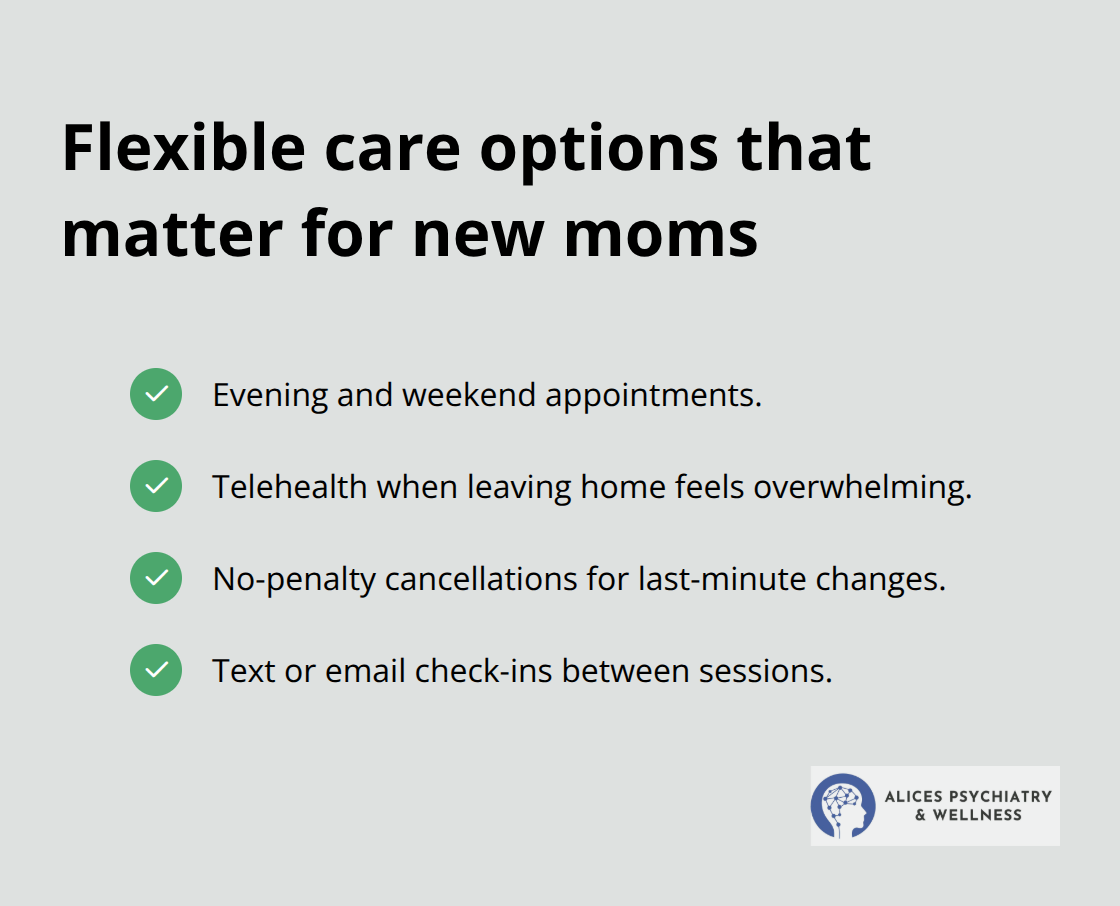
Look for providers who accommodate last-minute cancellations without penalty fees (understanding that unpredictable infant needs can disrupt planned appointments). The best therapists maintain flexible communication policies that allow text or email check-ins between sessions.
Location and Local Resources
Geographic accessibility matters significantly for new mothers. Therapists in Lilburn and Atlanta areas who understand local support resources can connect you with additional services like support groups and lactation consultants. Local providers also understand regional insurance networks and can help navigate coverage options more effectively.
Once you identify potential therapists with the right qualifications and accessibility, the next step involves asking specific questions to determine if they truly understand your needs as a new mother.
What Questions Should You Ask Potential Therapists
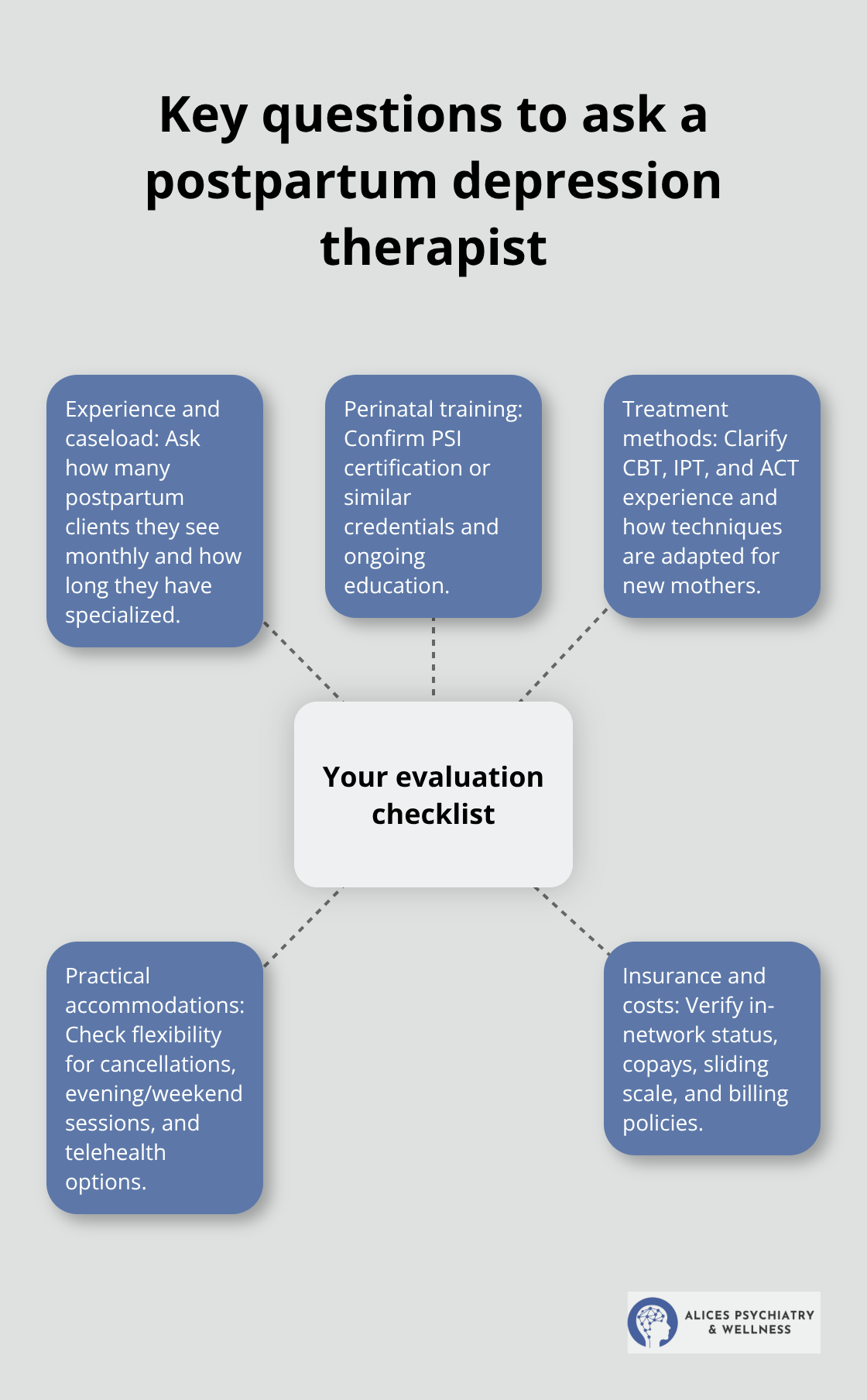
The first question must address their specific experience with postpartum depression rather than general depression or anxiety. Ask how many postpartum clients they currently see monthly and how long they have specialized in maternal mental health. Request details about their training in perinatal mental health certification through Postpartum Support International or similar organizations. Therapists who hesitate to discuss their caseload or provide vague answers about their experience should raise immediate concerns. The most qualified providers will readily share their background and explain how they stay current with maternal mental health research.
Treatment Approaches and Methods
Effective postpartum therapists should explain their primary treatment methods clearly without complex psychological jargon. Ask specifically about their experience with Cognitive Behavioral Therapy adapted for postpartum depression, Interpersonal Therapy for maternal relationships, and Acceptance and Commitment Therapy for psychological flexibility. Request examples of how they adapt techniques for sleep-deprived mothers and address hormone-related mood changes. Qualified therapists will describe concrete strategies they use for intrusive thoughts, bonding difficulties, and overwhelming anxiety.
Practical Accommodations for New Mothers
Ask about their policies for last-minute cancellations due to infant illness or feeding schedule disruptions. Effective providers offer flexible scheduling (including evening and weekend appointments), telehealth options when leaving home feels impossible, and shorter session lengths when needed. Inquire about their communication policies between sessions and whether they allow text or email check-ins during difficult periods. Therapists who understand new mother challenges will have specific systems in place rather than expect you to adapt to traditional therapy structures.
Insurance and Financial Considerations
Verify that your potential therapist accepts your insurance plan and understand their billing practices for missed appointments. Ask about sliding scale fees if financial constraints affect your ability to pay standard rates. Many qualified therapists in the Lilburn and Atlanta areas offer payment plans or reduced rates for postpartum clients who face financial hardship. Request clear information about session costs, insurance copays, and any additional fees for telehealth services before you commit to treatment.
Final Thoughts
Postpartum depression affects your daily life, but the right postpartum depression therapist transforms your recovery experience. Professional support provides evidence-based treatment methods that address your specific maternal mental health needs. Trust your instincts when you meet potential therapists and select someone who understands the unique challenges new mothers face.
The therapeutic relationship becomes your foundation for healing and personal growth during this transition. Qualified providers offer flexible schedules, telehealth options, and specialized knowledge about postpartum mood disorders. Local resources in Lilburn and Atlanta create additional support networks that complement individual therapy sessions.
We at Alice’s Psychiatry and Wellness provide personalized mental health care for women who experience life transitions and postpartum challenges. Our approach combines compassionate support with flexible treatment options that fit your schedule as a new mother. Professional help makes your postpartum experience manageable and supports your journey toward wellness (rather than leaving you to struggle alone).


