
ADHD in women looks different than most people think. Many women go years without a diagnosis because their symptoms don’t match the stereotype, and doctors often miss what’s really happening.
At Alice’s Psychiatry and Wellness, we’ve seen firsthand how the right female ADHD treatment can transform lives. This guide walks you through why diagnosis matters, what treatment options actually work, and how to find a specialist who gets it.
Why Women With ADHD Stay Undiagnosed
The Diagnostic Gap Between Boys and Girls
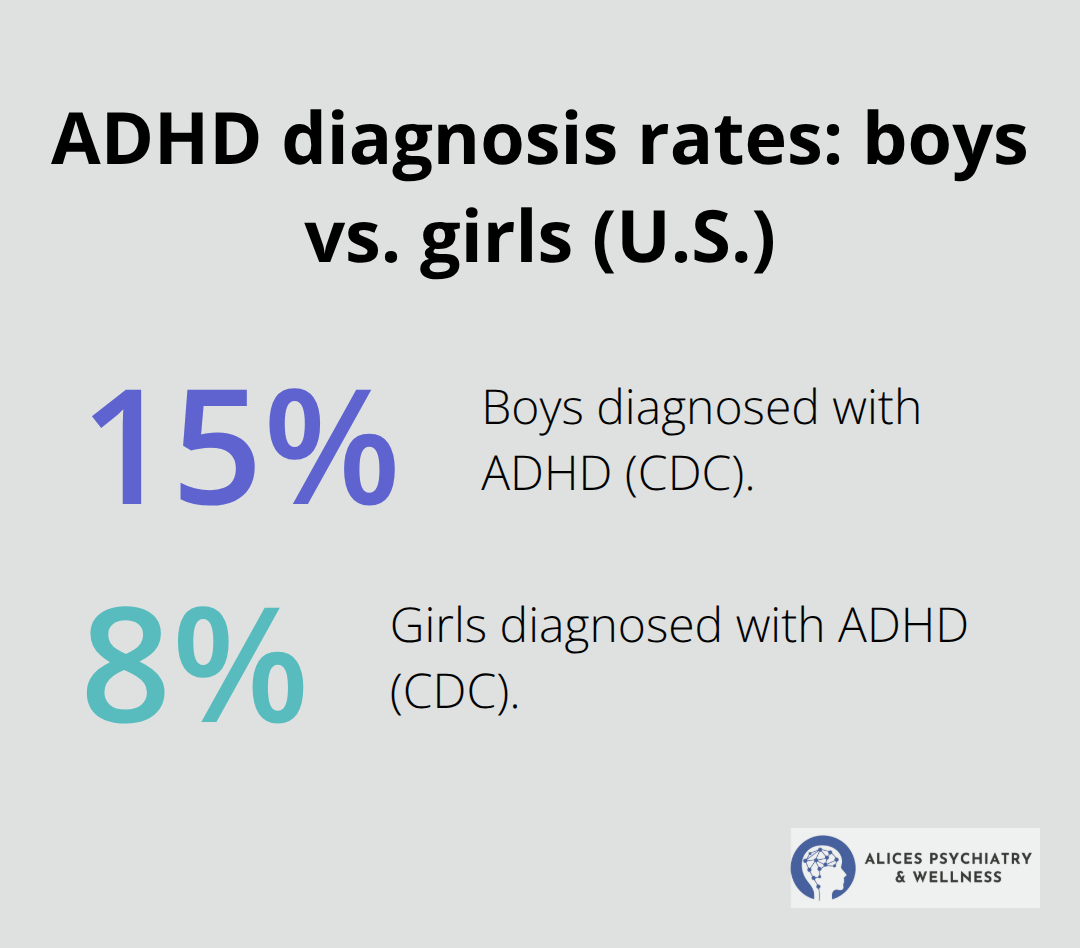
The diagnostic gap for women with ADHD is staggering. According to the CDC, boys (15%) were more likely to be diagnosed with ADHD than girls (8%). This disparity isn’t because girls have less ADHD-it’s because the condition presents differently and gets missed.
Research from JAMA Psychiatry and BMC Psychiatry shows that girls and women are more likely to display inattentive symptoms rather than the hyperactivity that doctors historically learned to recognize. A girl who sits quietly at her desk but can’t organize her thoughts or complete assignments looks like a daydreamer, not someone with ADHD. Teachers and parents don’t flag her as having a problem, so she never gets screened. Meanwhile, a boy who can’t sit still gets referred for evaluation immediately. This historical bias toward recognizing hyperactivity in boys has created a generation of undiagnosed women who developed elaborate coping mechanisms just to function.
How Women Hide ADHD Through Masking
Women with ADHD develop masking strategies so sophisticated that even trained clinicians miss the diagnosis. One woman might spend hours creating detailed lists and color-coded systems to compensate for her working memory struggles, making her look organized on the surface. Another might rely entirely on her partner to manage household logistics or use constant reminders on her phone to get through the day. These workarounds hide the underlying ADHD and actually work against diagnosis-a clinician who doesn’t probe deeply enough sees only the coping strategy, not the exhausting effort required to maintain it.
The Role of Self-Blame and Societal Pressure
Women with ADHD often internalize their struggles as personal failings rather than neurological differences. When she misses deadlines despite trying hard, she blames herself for being lazy or irresponsible instead of recognizing attention regulation difficulties. This self-blame, combined with societal pressure on women to appear competent and in control, means many women don’t mention their struggles to doctors. The misconception that ADHD means being hyperactive, disruptive, or obviously struggling has cost countless women years of unneeded frustration, anxiety, and depression that could have been addressed with proper treatment. Understanding these barriers is the first step toward getting an accurate diagnosis-and that’s where finding the right specialist becomes essential.
Treatment Options for Female ADHD
Medication Management as Your Foundation
Medication stands as the most effective starting point for women with ADHD, and the evidence supports this approach. Stimulant medications like Adderall, Ritalin, and Concerta work by increasing dopamine and norepinephrine-chemicals that regulate attention and impulse control. These medications typically begin working within about an hour, though finding the right medication and dose can take weeks or even months of adjustment. For women, this process matters more than most realize because ADHD often coexists with anxiety and depression, conditions that can complicate medication choices. Non-stimulant options like Strattera or Pamelor exist for women who don’t tolerate stimulants well, but stimulants remain the first-line treatment for most.
Pharmacogenetic Testing: Eliminating the Guessing Game
Pharmacogenetic testing changes medication management entirely. This genetic test identifies how your body metabolizes medications based on your DNA, potentially eliminating months of trial-and-error. Instead of guessing which medication will work, testing shows your clinician which drugs your genes process most effectively, reducing side effects and speeding up the path to symptom relief. This approach transforms treatment from a guessing game into a science-backed strategy tailored to your biology.
Therapy and Behavioral Strategies That Stick
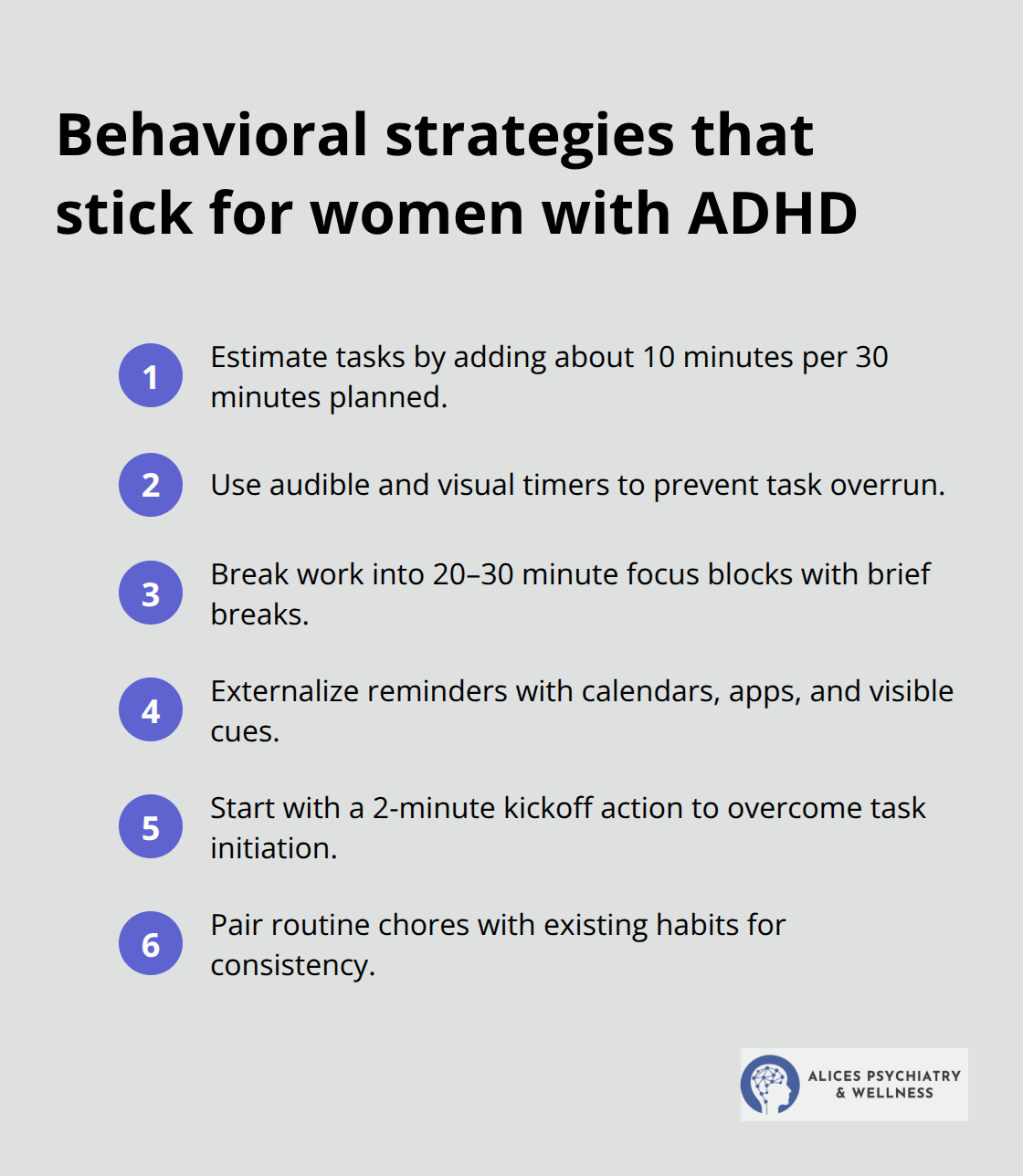
Therapy and lifestyle shifts work hand-in-hand with medication to create lasting change. Cognitive behavioral therapy and motivational interviewing help women develop practical strategies for time management, task initiation, and emotional regulation. One concrete tactic that works: add about 10 minutes to every 30-minute task estimate you make, since ADHD often distorts time perception. Using audible and visual timers provides external cues that prevent task overrun, a technique far more effective than willpower alone.
Physical Activity and Sleep as Treatment Tools
Regular physical activity reduces ADHD symptoms across inattention, hyperactivity, and impulsivity. Sleep quality directly influences ADHD symptoms and often improves when medication and therapy work together, creating a reinforcing cycle where better focus leads to better sleep, which leads to better focus.
Building Your Support Network
Building a robust support network matters especially for women, whose stress response relies heavily on social connection; isolation amplifies ADHD burden while strong friendships and peer groups anchor recovery. Group coaching or women-centered ADHD support communities provide validation and practical strategies in a space where you’re not the only one struggling. Finding a clinician in Lilburn or Atlanta who screens comprehensively for sleep disorders, fibromyalgia, and trauma history-conditions that frequently accompany ADHD in women-ensures your entire health picture gets addressed, not just the attention piece. This comprehensive approach sets the stage for identifying the right specialist who can coordinate all these elements of your care.
Finding the Right ADHD Specialist for Women
Finding the right ADHD specialist means looking past credentials alone. Many psychiatrists and psychiatric nurse practitioners list ADHD on their website, but far fewer have deep experience recognizing and treating female presentations. The clinician you need screens for co-occurring anxiety, depression, and sleep disorders from the start-not as an afterthought. Women with ADHD face higher risks of anxiety and depression than men, according to research in JAMA Psychiatry, so your provider must treat the whole picture. Ask directly whether they screen for sleep problems and fibromyalgia, conditions that frequently accompany ADHD in women and complicate treatment if overlooked.
What to Look for in an ADHD Provider
Look for someone who offers pharmacogenetic testing or works with a lab that does. This single tool can help guide medication selection and shows whether your body metabolizes stimulants like Adderall or Ritalin efficiently. A provider who dismisses this option is choosing guesswork over science. Beyond testing, ask whether they treat women specifically or have substantial experience with female ADHD presentations.
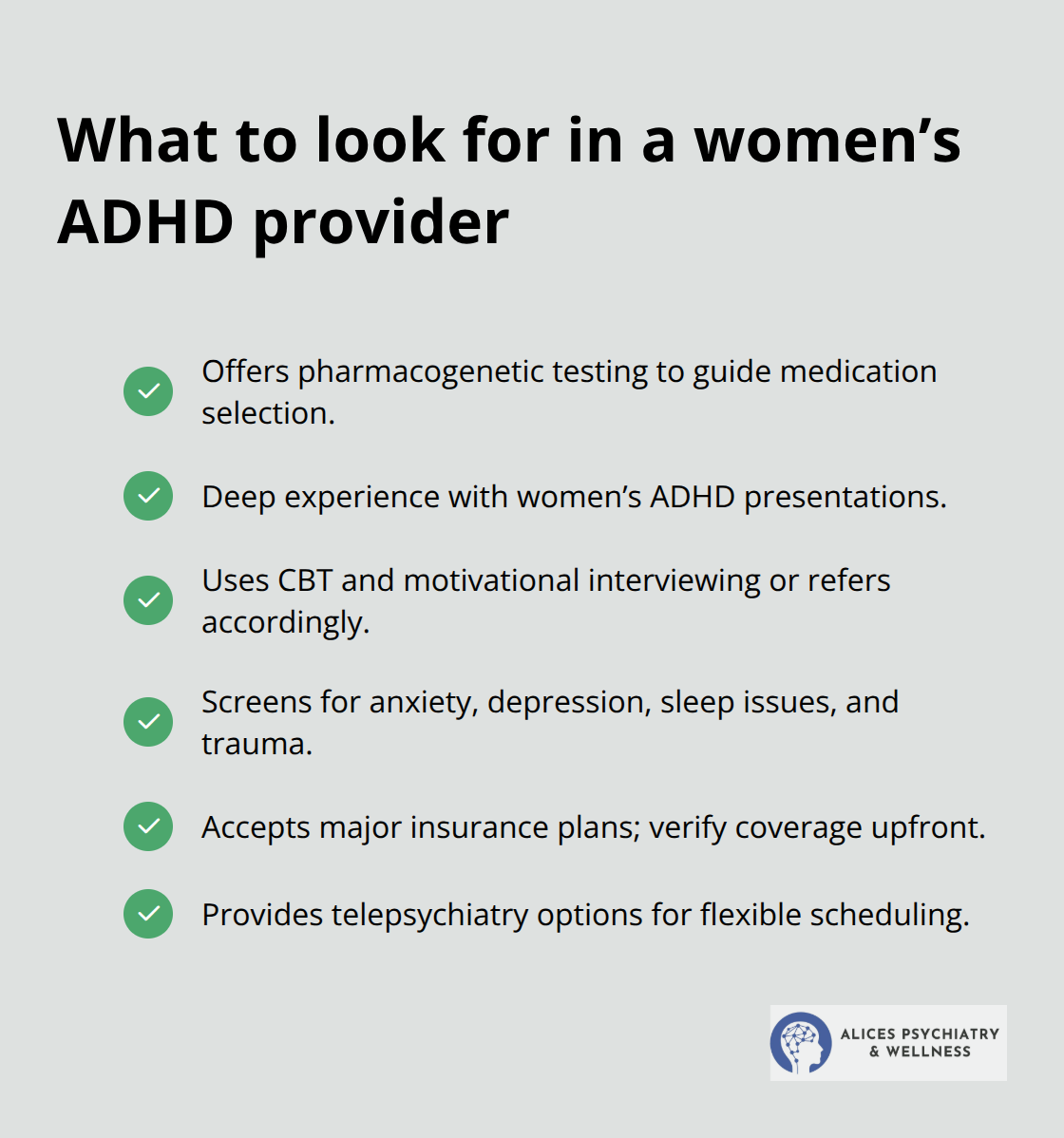
Clinicians trained primarily on boys and men often miss inattentive symptoms or dismiss organizational struggles as personality traits rather than ADHD. Request information about their therapy approach-cognitive behavioral therapy and motivational interviewing produce measurable outcomes for women, so verify that your provider either offers these directly or refers you to a therapist trained in these modalities. Insurance acceptance matters too; major plans like Aetna, Cigna, UnitedHealthcare, BlueCross BlueShield, and Humana cover psychiatric evaluations and medication management, so verify coverage before you book. Telepsychiatry availability removes a significant barrier for working mothers and caregivers with packed schedules-many quality providers now offer virtual appointments that work just as well as in-person visits for medication management and therapy.
Questions to Ask During Your Consultation
During your first consultation, ask how they determine medication dosing and whether they use pharmacogenetic data to guide choices. A vague answer signals they default to standard protocols rather than tailoring to your biology. Ask directly about their experience treating ADHD in women and whether they screen for trauma history, since many women with undiagnosed ADHD develop complex trauma from years of criticism and self-blame. Inquire whether they address lifestyle factors like sleep and exercise as part of treatment or view medication as the only lever. Strong providers integrate behavioral strategies with medical management. Ask about follow-up frequency and how they monitor medication effectiveness-you need regular check-ins during the first months, not a single appointment followed by silence. Find out if they work collaboratively with therapists or refer you out, and whether they coordinate care if you have other providers involved. Finally, ask what their philosophy is on combining therapy with medication; the evidence strongly favors both together, and any provider dismissing therapy as unnecessary does not align with current research.
How Personalized Care Transforms Your Outcomes
Generic ADHD treatment fails women because it ignores the specifics of how ADHD shows up in your life. One woman’s core struggle might be time blindness that destroys her work schedule; another might battle emotional dysregulation that manifests as anxiety. A provider who takes time to map your individual symptom profile, priorities, and constraints designs a treatment plan that actually fits your reality instead of forcing you into a standardized protocol. Personalized care also means your clinician adjusts course based on what works for you, not what works for most people. Some women respond beautifully to stimulants; others tolerate non-stimulant options better. Some thrive with intensive therapy; others need primarily medication support with occasional check-ins. Your provider should listen to your feedback and adapt rather than insist on a fixed approach. This flexibility accelerates progress and prevents the frustration of treatments that do not match your needs.
Final Thoughts
An accurate ADHD diagnosis as a woman transforms how you see yourself and your struggles. You stop blaming yourself for challenges rooted in neurology rather than character, and you gain access to female ADHD treatment that actually works-medication tailored to your genetics, therapy that addresses your specific life, and support systems that validate your experience. Personalized care makes all the difference; your provider screens for anxiety, depression, sleep problems, and trauma from the start, offers pharmacogenetic testing to guide medication choices, and combines medication with behavioral strategies rather than treating them as separate paths.
Taking the first step means reaching out to a specialist who recognizes ADHD in women. In the Lilburn and Atlanta areas, quality providers work both in-person and through telepsychiatry, removing barriers for working mothers and caregivers with demanding schedules. When you call, ask directly about their experience with female ADHD presentations, their approach to pharmacogenetic testing, and how they address co-occurring conditions-these questions separate providers who truly understand women’s ADHD from those who simply list it on their website.
We at Alice’s Psychiatry and Wellness specialize in personalized psychiatric evaluations, medication management guided by pharmacogenetic testing, and therapy tailored to your life. We work with women navigating ADHD alongside anxiety, depression, and the demands of work and caregiving. Schedule a confidential consultation and begin your journey toward clarity and relief.


