
Anxiety affects millions of Americans, often leaving people searching for natural ways to find relief alongside traditional treatment options.
We at Alice’s Psychiatry and Wellness understand that supplements that help with anxiety can play a valuable role in your mental health journey. Research shows that certain nutrients support brain function and may reduce anxiety symptoms when used properly.
The key lies in choosing evidence-based options that work safely with your current treatment plan.
Why Your Body Needs the Right Nutrients to Fight Anxiety
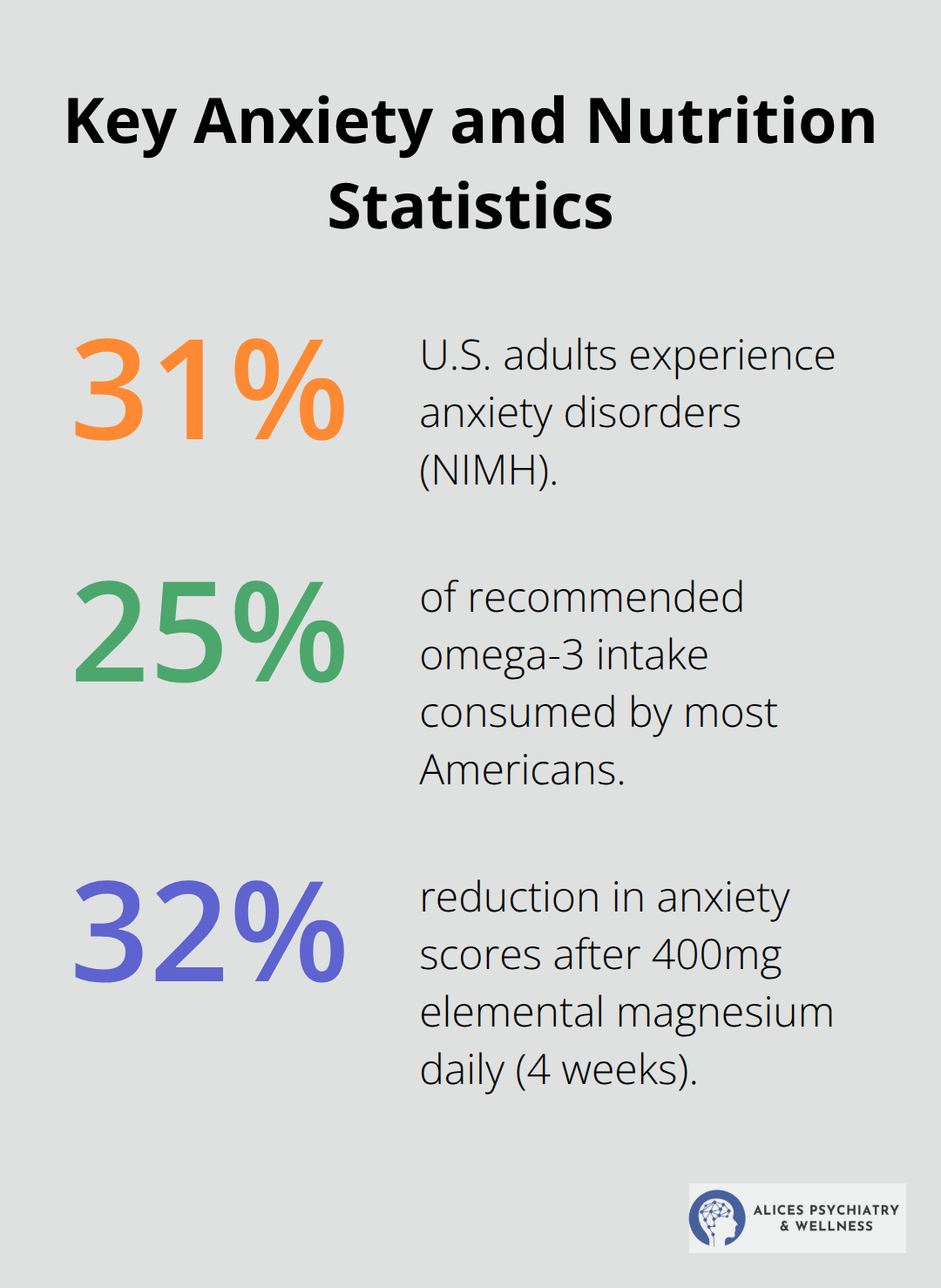
Anxiety triggers a cascade of physical changes that drain your body’s nutrient stores faster than you might realize. Stress hormones like cortisol flood your system and deplete magnesium, B vitamins, and omega-3 fatty acids at accelerated rates. The National Institute of Mental Health reports that 31.1% of adults experience anxiety disorders, yet most people don’t realize how nutritional deficiencies fuel their symptoms.
Magnesium Deficiency Creates a Vicious Cycle
Your muscles tense, your heart races, and sleep becomes elusive when magnesium levels drop below optimal ranges. Research shows that magnesium deficiency affects a significant portion of the population, and this deficiency directly worsens anxiety symptoms. Low magnesium disrupts GABA production (the brain’s primary calming neurotransmitter) while it simultaneously increases stress hormone release. Research published in Psychiatry Research demonstrates that magnesium supplementation at 400mg daily significantly reduces anxiety scores within just four weeks.
Omega-3 Deficiency Impairs Brain Communication
Your brain contains more omega-3 fatty acids than any other organ, yet most Americans consume only 25% of recommended amounts according to JAMA Network Open research. This shortage disrupts neurotransmitter function and increases inflammation in brain regions that regulate mood. Studies show that omega-3 treatment provides significant improvement in anxiety symptoms compared to controls, while adequate omega-3 intake supports serotonin production and reduces cortisol responses to stress.
B Vitamins Support Your Nervous System Under Stress
Chronic anxiety depletes B vitamins faster than your diet can replace them. Vitamin B6 plays a direct role in neurotransmitter synthesis, while B12 maintains healthy nerve function throughout your body. Research shows that adults who take 100mg of B6 daily for one month experience significant improvements in both anxiety and depression symptoms. These vitamins work together to stabilize your nervous system’s response to daily stressors.
The right supplements can address these specific deficiencies, but quality and dosage matter more than most people realize.
Which Supplements Actually Work for Anxiety
Magnesium Delivers Fast Relief for Physical Symptoms
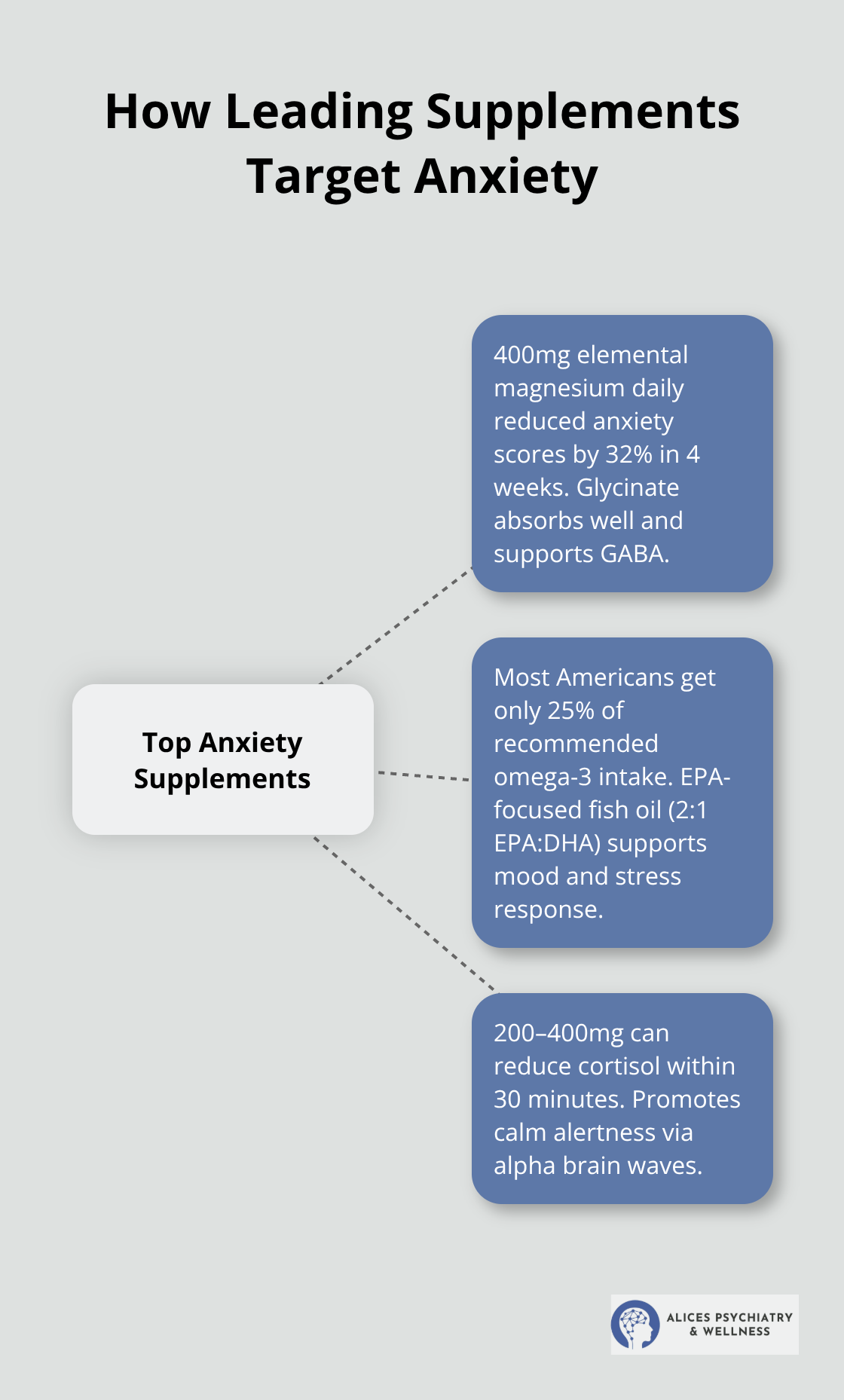
Magnesium stands out as the most effective supplement for anxiety relief, particularly for physical symptoms like muscle tension and racing thoughts. Clinical trials demonstrate that 400mg of elemental magnesium daily reduces anxiety scores by 32% within four weeks. Participants report improved sleep quality and reduced muscle tension across multiple studies.
The glycinate form absorbs best and causes fewer digestive issues than magnesium oxide. Adults often see results within the first week of consistent use, with sleep improvements appearing even sooner. This mineral directly supports GABA production while it reduces cortisol release during stressful situations.
Omega-3 Fatty Acids Target Brain Function
Omega-3 fatty acids target anxiety at the neurological level, with EPA doses of 2,000mg daily showing the strongest anti-anxiety effects according to meta-analyses in JAMA Network Open. Fish oil supplements with a 2:1 EPA to DHA ratio work better for mood regulation than balanced formulations.
These essential fats reduce inflammation in brain regions that control mood while they support neurotransmitter production. The anti-anxiety effects typically appear after 4-6 weeks of consistent supplementation (though some people notice improvements sooner).
L-Theanine Provides Rapid Calming Effects
L-theanine provides rapid relief for acute anxiety episodes, with 200-400mg doses reducing cortisol within 30 minutes while maintaining mental clarity. This amino acid from green tea crosses the blood-brain barrier efficiently and promotes alpha brain wave activity associated with relaxation.
GABA supplements face absorption challenges, making L-theanine the superior choice for calming effects. The compound works synergistically with caffeine, which explains why green tea produces calm alertness rather than jittery energy.
Quality Brands Make a Difference
Third-party tested brands like Nordic Naturals for omega-3s and Suntheanine for L-theanine deliver consistent results. These companies verify potency and purity through independent laboratories, which matters significantly for supplement effectiveness.
Start with magnesium for foundational support, add omega-3s for long-term brain health, then incorporate L-theanine for situational anxiety management. However, choosing high-quality products requires more than just recognizing brand names.
How Do You Pick Safe, Effective Supplements?
Look Beyond Marketing Claims on Labels
Supplement labels contain more misleading information than helpful guidance, with manufacturers allowed to make structure-function claims without FDA approval. The dosage listed often represents the entire capsule weight rather than active ingredient content, which explains why 500mg magnesium capsules typically contain only 100mg of elemental magnesium.
Proprietary blends hide individual ingredient amounts behind vague terms like “anxiety support complex,” which makes it impossible to evaluate effectiveness. Smart consumers focus on three critical label elements: the specific form of each nutrient (magnesium glycinate versus magnesium oxide), milligrams of active compounds, and required doses per day.

Avoid products with long ingredient lists that include fillers, artificial colors, or unnecessary additives that increase costs without better results.
Third-Party Testing Separates Quality from Garbage
NSF International and ConsumerLab.com provide supplement verification, with NSF being the only independent, third-party testing organization that offers true testing of dietary supplements. Products with USP Verified marks have undergone rigorous tests for heavy metals, pesticides, and microbial contaminants that cheaper alternatives often contain.
Nordic Naturals fish oil consistently passes third-party tests for mercury and PCBs, while many drugstore brands fail these same tests according to ConsumerLab.com reports. Suntheanine represents the only clinically studied form of L-theanine, yet generic versions flood the market without research support.
Check for Dangerous Medication Interactions
Supplements interact with prescription medications more frequently than most people realize, particularly blood thinners and antidepressants. St. John’s wort reduces the effectiveness of many medications, including warfarin, phenprocoumon, cyclosporin, and HIV protease inhibitors, while high-dose omega-3s can increase bleeding risk when combined with warfarin.
Magnesium supplements may interfere with certain antibiotics and blood pressure medications. Always inform your healthcare provider about all supplements before starting new prescriptions or changing doses of existing medications.
Final Thoughts
Evidence-based supplements that help with anxiety require careful selection based on quality standards and professional guidance. Magnesium, omega-3 fatty acids, and L-theanine offer the strongest research support for anxiety relief when you choose third-party tested products with proper dosages. Quality matters more than price when you select anxiety supplements, as NSF International certification and ConsumerLab.com verification separate effective products from marketing gimmicks.
Professional guidance becomes essential for safe supplement use, especially when you take prescription medications or have underlying health conditions. Supplements work best as part of comprehensive anxiety treatment that includes therapy and medication management when appropriate. The right combination addresses both nutritional deficiencies and the underlying causes of your anxiety symptoms.
Alice’s Psychiatry and Wellness provides personalized mental health care for adults in Lilburn, GA, Atlanta, GA, and multiple states through telepsychiatry services. Our team helps you develop treatment plans that may include supplements alongside other evidence-based approaches. Professional care reduces trial-and-error approaches to anxiety management while it addresses the root causes of your symptoms.


