
Women with ADHD face unique challenges that often go unrecognized for years. Traditional diagnostic criteria miss how symptoms present differently in females, leading to delayed treatment and unnecessary struggles.
At Alice’s Psychiatry and Wellness, we understand that ADHD in women treatment requires a specialized approach. This guide covers everything from recognizing symptoms to managing life transitions in Lilburn, GA and Atlanta, GA.
Why ADHD in Women Treatment Remains Elusive for Decades
Diagnostic Criteria Miss Female Presentation Patterns
The Centers for Disease Control and Prevention reports that approximately 75% of adult women with ADHD remain undiagnosed. This staggering statistic reflects a fundamental problem: diagnostic criteria were developed based on how ADHD presents in boys, completely missing the subtle ways symptoms appear in girls and women. Girls typically show inattentive symptoms rather than hyperactive behaviors, leading teachers and parents to label them as daydreamers or quiet students instead of recognizing ADHD.
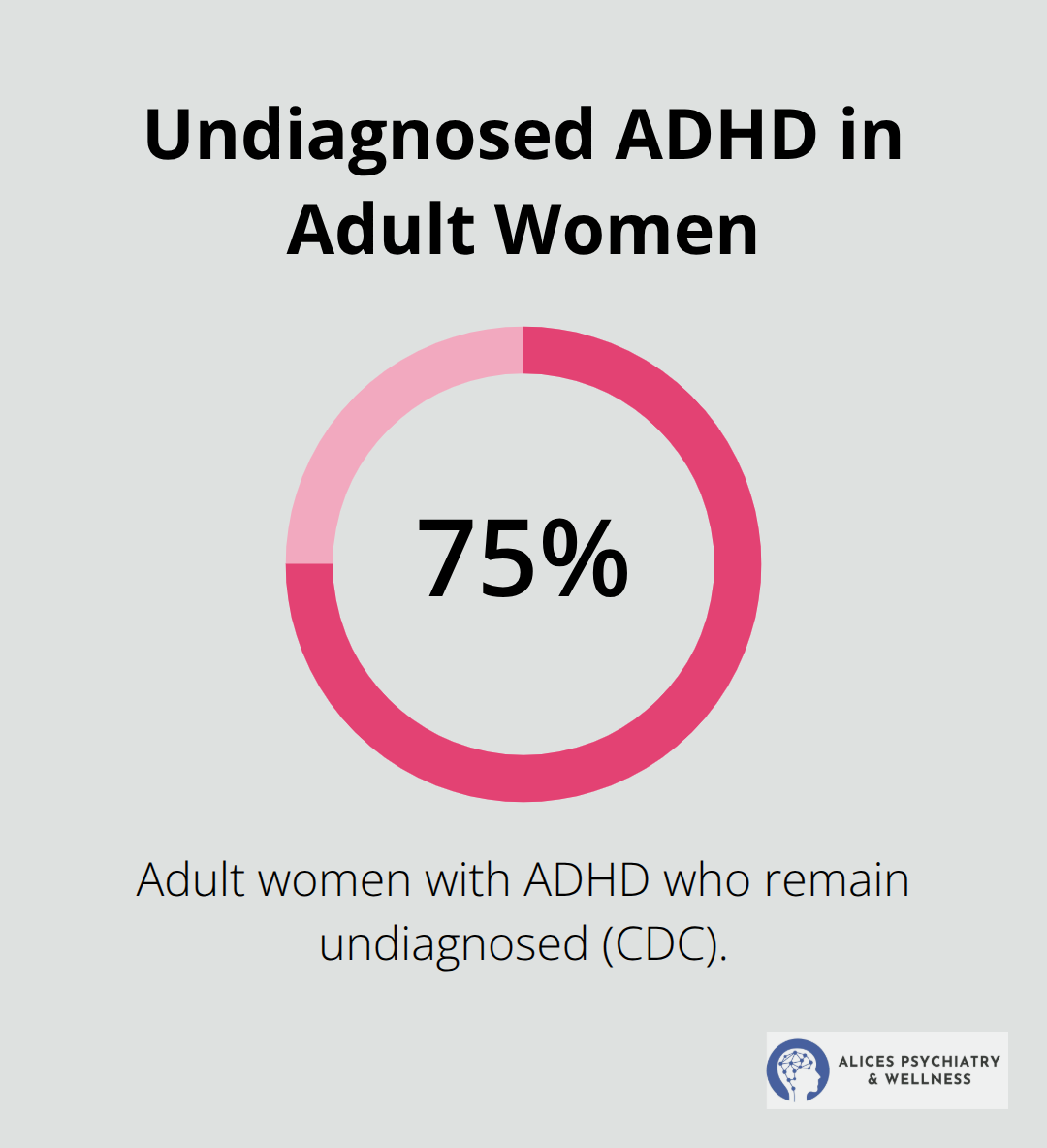
The male-to-female diagnosis ratio ranges from 3:2 to 12:1, highlighting this massive underdiagnosis problem that leaves millions of women without proper support.
Hormonal Fluctuations Intensify ADHD Symptoms
Estrogen levels directly impact dopamine production, which means women experience symptom fluctuations throughout their menstrual cycles, pregnancy, and menopause. During low estrogen phases (particularly during menstruation and perimenopause), ADHD symptoms become significantly more pronounced, affecting focus, emotional regulation, and impulse control. Many women first seek help during perimenopause when declining estrogen makes previously manageable symptoms overwhelming. Between 2000 and 2005, women seeking adult ADHD medication increased by 11% annually, largely due to this hormonal connection becoming better understood.
Women Mask Their Symptoms Through Perfectionism
Women develop sophisticated coping mechanisms that hide their ADHD symptoms for years. They create elaborate organizational systems, work twice as hard as their peers, and internalize feelings of inadequacy when these strategies eventually fail. This masking behavior often leads to anxiety, depression, and burnout before the underlying ADHD gets recognized. Women spend decades feeling broken or lazy, when they actually have a treatable neurodevelopmental condition that responds well to proper intervention.
These diagnostic challenges make effective treatment options even more important for women who finally receive an ADHD diagnosis.
Which ADHD Treatments Work Best for Women
Stimulant Medications Deliver Strong Response Rates in Women
Central nervous system stimulants like Adderall, Ritalin, Concerta, and Dexedrine remain the gold standard for ADHD treatment, with 70-80% of women experiencing significant symptom improvement. These medications enhance dopamine and norepinephrine levels in the brain, which directly address the neurochemical imbalances that cause focus and impulse control issues. Women often need dosage adjustments during different phases of their menstrual cycle, as estrogen fluctuations affect how their bodies process these medications. Non-stimulant options like Strattera and Pamelor work well for women who experience side effects from stimulants or have co-occurring anxiety disorders (though they typically take 4-6 weeks to reach full effectiveness compared to stimulants’ immediate impact).
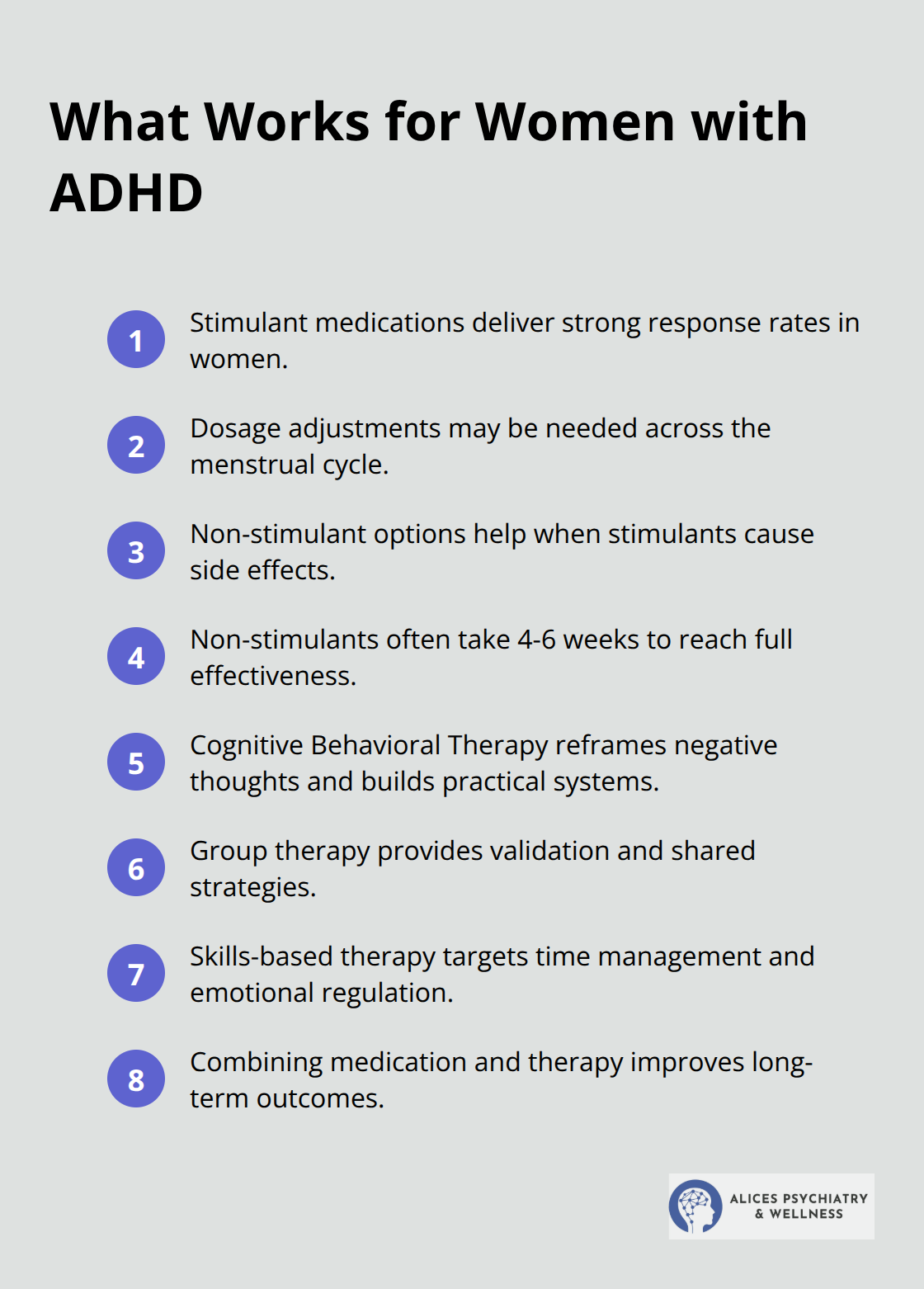
Cognitive Behavioral Therapy Targets Female-Specific ADHD Challenges
Women benefit significantly from therapy approaches that tackle the shame and perfectionism patterns they develop over years of undiagnosed ADHD. Cognitive Behavioral Therapy helps women reframe negative thought patterns about their capabilities and develop practical systems that work with their brain rather than against it. Group therapy sessions provide powerful validation for women who spent decades feeling isolated and different, while skills-based therapy focuses on time management, emotional regulation, and workplace communication strategies. Research shows that medication combined with therapy produces better long-term outcomes than medication alone, particularly for women who struggle with rejection sensitivity and emotional dysregulation.
Lifestyle Modifications Target Women’s Unique ADHD Patterns
Regular exercise produces immediate dopamine boosts that rival medication effects, with 30 minutes of cardiovascular activity providing focus benefits for up to 2 hours afterward. Sleep hygiene becomes essential for women with ADHD, as hormonal fluctuations already disrupt sleep patterns, and poor sleep amplifies every ADHD symptom. Mindfulness practices specifically help women manage the emotional overwhelm that often accompanies their ADHD, teaching them to recognize when they become overstimulated before they reach crisis points. Nutritional approaches that stabilize blood sugar throughout the day prevent the energy crashes that make ADHD symptoms worse, while omega-3 supplementation supports the brain’s neurotransmitter production.
Women with ADHD face additional complexities as they navigate major life transitions, where hormonal changes can dramatically impact symptom management and treatment effectiveness.
How Life Changes Affect ADHD Treatment in Women
Pregnancy and Postpartum Create Complex Medication Decisions
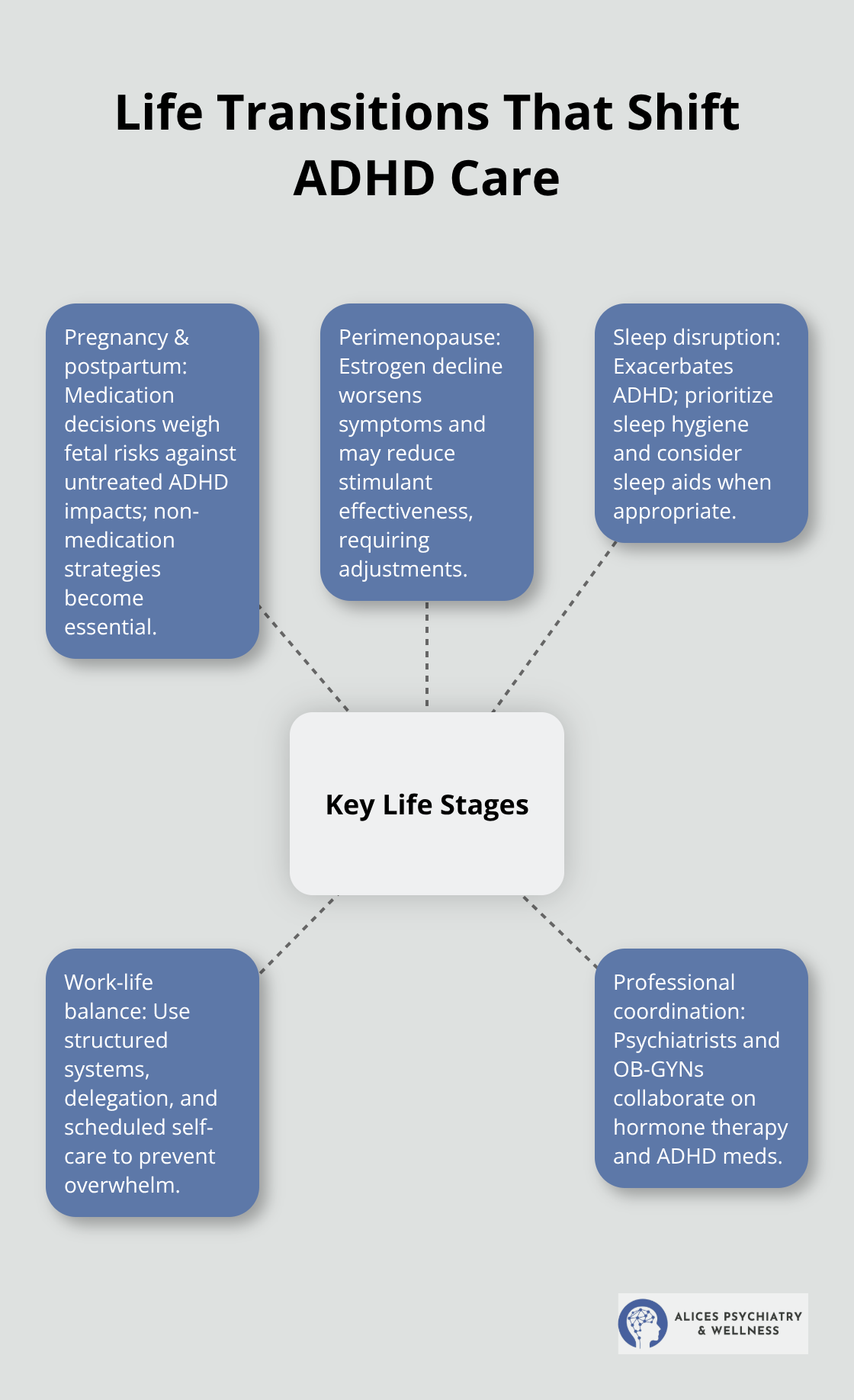
Pregnancy forces difficult treatment decisions for women with ADHD, as most stimulant medications carry potential risks during fetal development. The American College of Obstetricians and Gynecologists states that untreated ADHD during pregnancy increases risks of depression, anxiety, and poor self-care behaviors that can harm both mother and baby. Women who stop medication often experience severe symptom rebounds, which leads to difficulties with prenatal appointment attendance, nutrition plans, and emotional regulation. Non-medication strategies become essential during this period, including structured sleep schedules, regular exercise, and cognitive behavioral therapy techniques. Postpartum depression affects new mothers, but women with ADHD face higher rates, making careful treatment adjustments critical during the first year after delivery.
Perimenopause Demands Aggressive Treatment Modifications
Estrogen decline during perimenopause dramatically worsens ADHD symptoms, with many women experiencing their most severe difficulties between ages 45-55. Research shows that stimulant medication effectiveness can drop during this transition, which requires dosage increases or additional non-stimulant medications like Strattera. Hormone replacement therapy can restore some symptom control, but requires coordination between psychiatrists and gynecologists to balance ADHD treatment with menopause management. Sleep disruption during perimenopause compounds ADHD symptoms, which makes sleep hygiene interventions and sometimes sleep aids necessary components of treatment.
Women often need workplace accommodations during this period, as cognitive symptoms become more pronounced and traditional strategies stop working effectively.
Work-Life Balance Requires Systematic Approaches
Women with ADHD who juggle career and family responsibilities need structured systems rather than relying on willpower alone. Time-blocking schedules that account for ADHD hyperfocus periods maximize productivity, while delegation strategies prevent overwhelming to-do lists. Self-care becomes non-negotiable rather than optional, with women needing to schedule exercise, therapy appointments, and downtime like any other essential task. Professional support helps women develop realistic expectations and sustainable routines that accommodate their ADHD symptoms rather than fighting against them, particularly during high-stress periods when symptoms intensify.
Final Thoughts
ADHD in women treatment requires specialized care that addresses the unique ways symptoms present in females. Women often struggle for decades before they receive proper diagnosis and support, which makes professional guidance essential for effective management. The right provider understands how hormonal changes affect ADHD symptoms throughout different life stages.
We at Alice’s Psychiatry and Wellness understand that successful treatment combines medication management, therapy, and lifestyle modifications tailored to each woman’s specific needs. Our approach focuses on your whole person rather than just your symptoms. Women benefit from providers who recognize their unique challenges and help them thrive in all areas of life.
The journey becomes more manageable with consistent professional support (especially during major life transitions like pregnancy or menopause). Taking the first step means scheduling a comprehensive psychiatric evaluation to develop your personalized treatment plan. Alice’s Psychiatry and Wellness offers compassionate care that makes treatment accessible for busy women who balance work and family responsibilities.


