
Anxiety affects 40 million adults in the United States each year, making natural relief methods increasingly valuable. Many people turn to herbal remedies as a gentle complement to traditional treatment approaches.
We at Alice’s Psychiatry and Wellness understand that teas that help with anxiety can provide meaningful support for daily stress management. These natural options offer accessible ways to promote relaxation and calm.
Which Teas Work Best for Anxiety
Chamomile Tea Delivers Proven Results
Chamomile stands as the most researched tea for anxiety relief. Clinical trials show that 9 out of 10 studies confirm chamomile’s effectiveness in reducing anxiety symptoms. The active compound apigenin modulates neurotransmitter pathways in your brain and creates measurable calming effects.
Daily consumption of 1-2 cups provides therapeutic benefits within 2-8 weeks. A study with postmenopausal women demonstrated significant anxiety reduction after regular chamomile tea consumption. The dosage ranges from 250mg to 2,000mg daily (making 2 cups of properly brewed tea optimal for most adults).
No significant adverse effects have been reported in clinical research, which makes chamomile the safest choice for daily anxiety management.
Green Tea Offers Unique L-Theanine Benefits
Green tea contains L-theanine, an amino acid that increases alpha wave activity in your brain while it promotes focus without drowsiness. This compound works synergistically with green tea’s minimal caffeine content to create calm alertness.
Research published in the American Journal of Clinical Nutrition links regular green tea consumption to decreased anxiety and depression risk. The combination helps regulate stress response naturally while it supports emotional balance. Drink 2-3 cups daily between meals for maximum L-theanine absorption.
Lavender and Valerian Root Provide Additional Relief
Lavender tea provides anti-anxiety effects through aromatherapy and direct consumption. It improves sleep quality and reduces headaches while it calms your nervous system. Valerian root tea acts as a natural sedative for racing thoughts (often called “herbal Xanax” in traditional medicine).
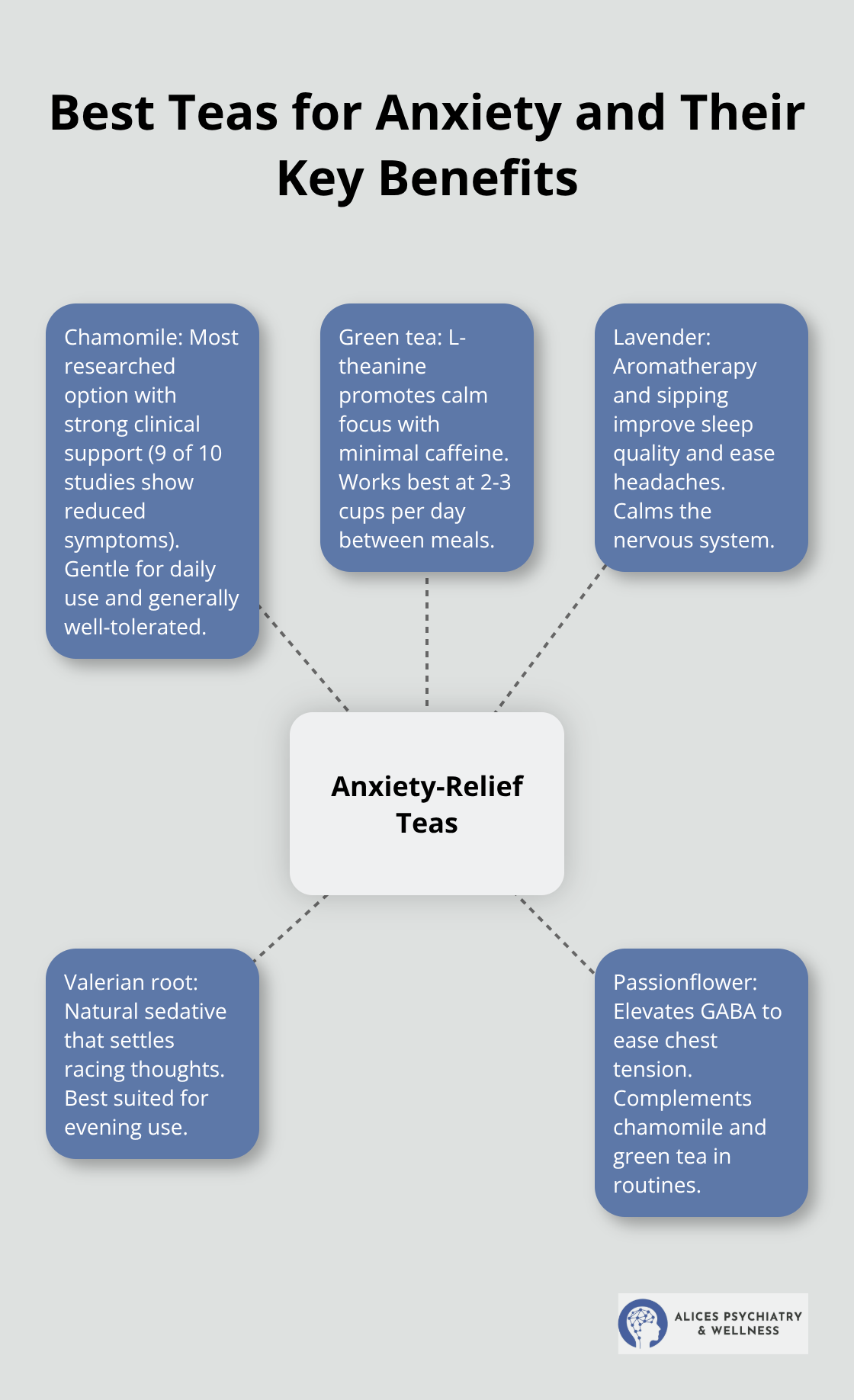
Passionflower tea elevates GABA levels for enhanced relaxation and works particularly well for chest tension associated with anxiety. These teas complement chamomile and green tea perfectly in your daily routine.
The next step involves learning proper preparation techniques to maximize these therapeutic benefits.
How Should You Brew and Time Anxiety-Relief Teas
Water Temperature and Steeping Times Matter Most
Water temperature dramatically affects the extraction of therapeutic compounds in anxiety-relief teas. Chamomile requires water heated to 212°F for 5-7 minutes to fully extract apigenin, while green tea needs cooler water at 175-185°F for just 2-3 minutes to preserve L-theanine without excessive tannins. Lavender and valerian root teas perform best with boiling water and 10-minute steeping times. Use one teaspoon of loose herbs or one tea bag per 8 ounces of water for optimal potency. Cover your cup during steeping to prevent essential oils from escaping and maximize therapeutic benefits.
Morning Green Tea and Evening Chamomile Create Perfect Balance
Drink green tea between 10 AM and 2 PM when cortisol levels naturally decline but energy remains needed. The L-theanine provides calm focus without interference with sleep patterns. Switch to chamomile tea 30-60 minutes before bedtime to activate relaxation responses and prepare your nervous system for rest.
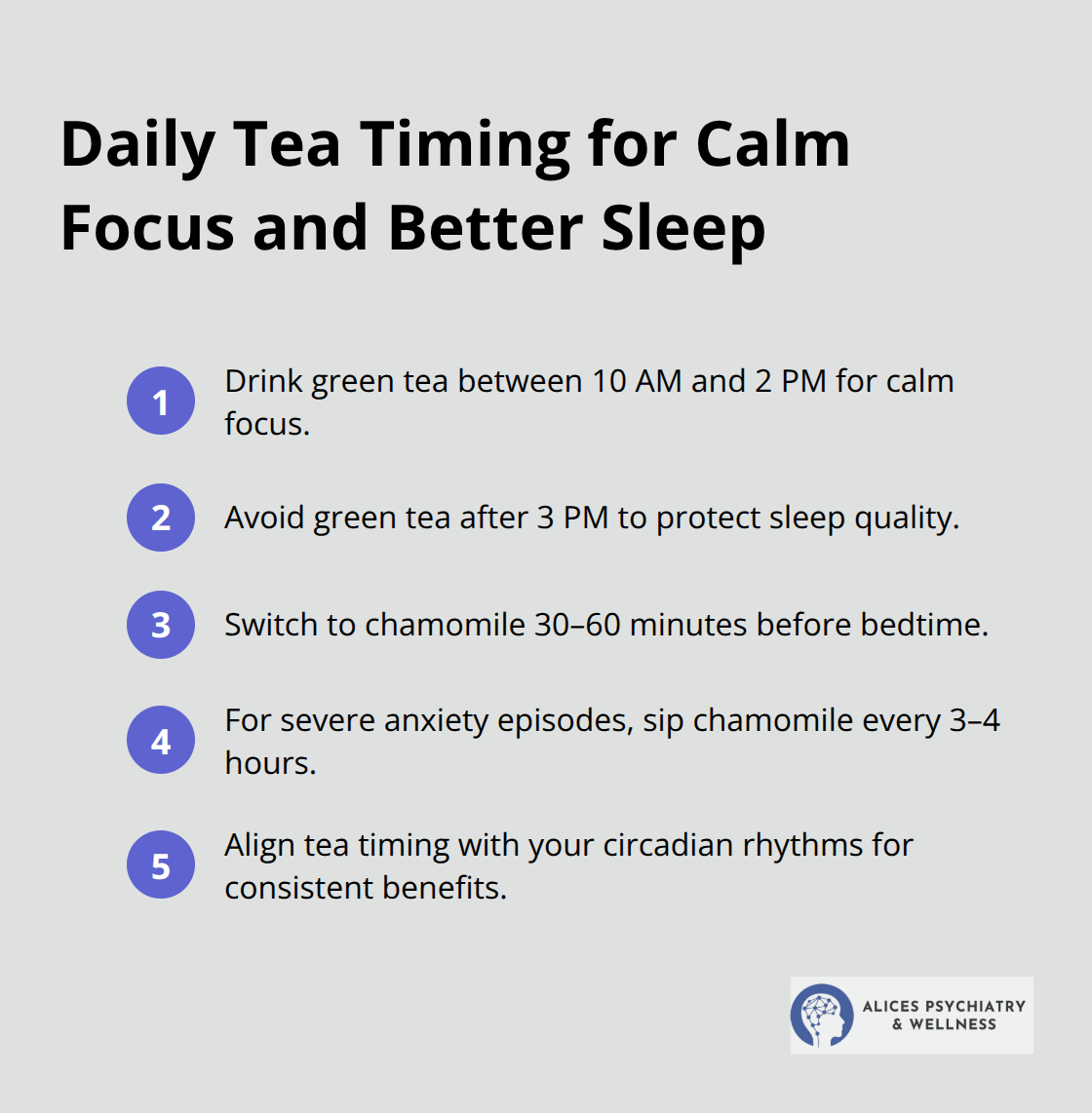
Avoid green tea after 3 PM since even small amounts of caffeine can disrupt sleep quality. For severe anxiety episodes, sip chamomile tea throughout the day at 3-4 hour intervals. This strategy leverages each tea’s unique properties while it supports your body’s natural circadian rhythms.
Combine Tea Rituals with Deep Breathing Techniques
Create a 5-minute mindfulness routine while your tea steeps. Practice box breathing (4 counts in, hold 4, out 4, hold 4) to activate your parasympathetic nervous system before you drink. Hold the warm cup with both hands and inhale the steam for aromatherapy benefits. Drink tea slowly over 10-15 minutes to extend the calming experience and prevent rushing through this therapeutic practice. Pair tea consumption with gentle stretching or journaling to amplify stress-reduction benefits.
These preparation and timing techniques maximize therapeutic effects, but proper safety considerations remain essential for effective anxiety management.
What Safety Risks Should You Know About Anxiety Teas
Medication Interactions Require Immediate Attention
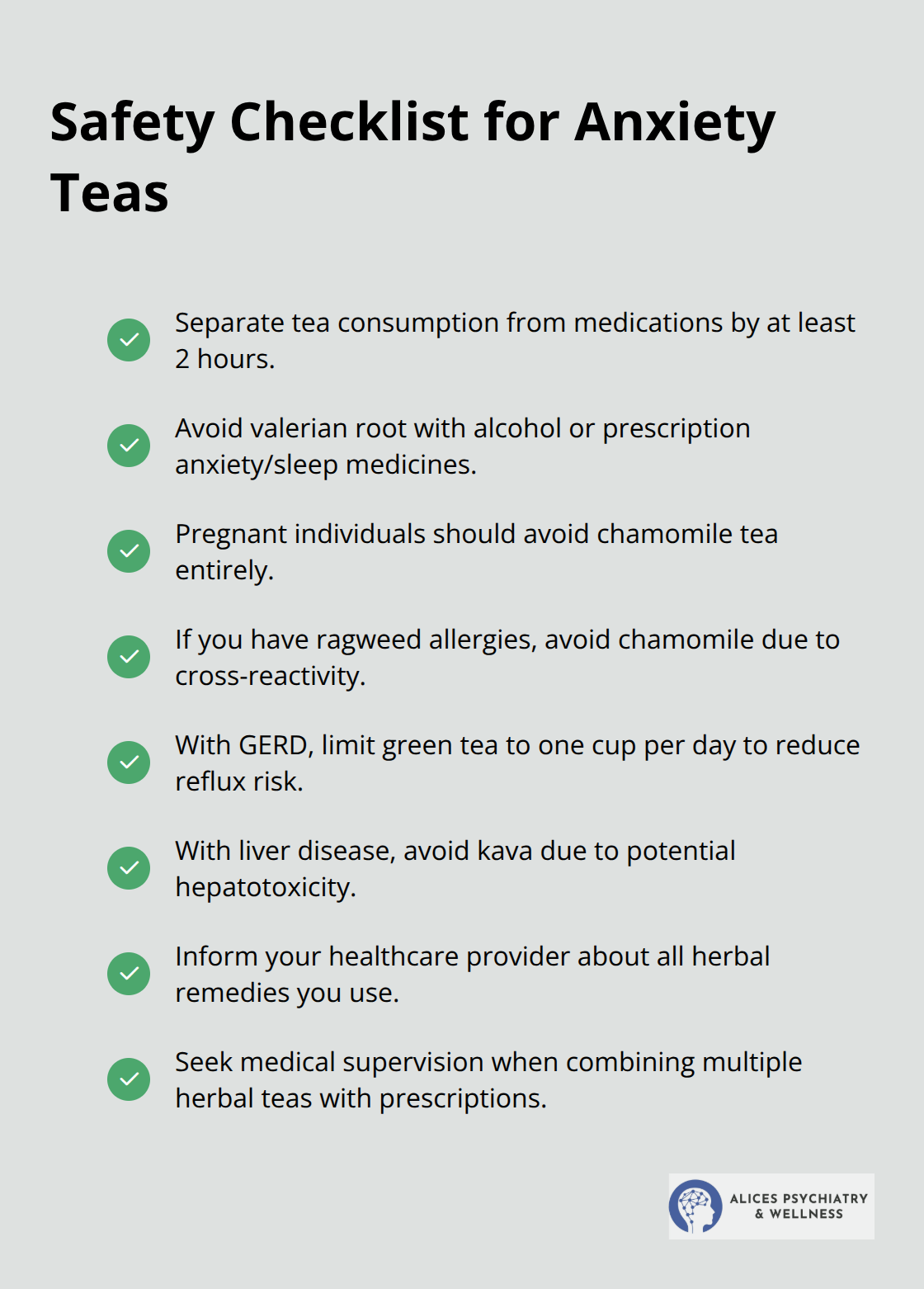
Herbal teas interact with prescription medications in dangerous ways. Chamomile amplifies blood-thinning medications like warfarin and increases sedation when you combine it with benzodiazepines or sleep aids. Green tea reduces iron absorption when you consume it with iron supplements and interferes with beta-blockers used for anxiety management. Valerian root intensifies central nervous system depressants and should never mix with alcohol or prescription anxiety medications. St. John’s Wort found in some anxiety blends reduces the effectiveness of birth control pills, antidepressants, and blood pressure medications. Always separate tea consumption from medication doses by at least 2 hours and inform your healthcare provider about all herbal remedies you use.
Medical Conditions That Require Extra Caution
Pregnant women should avoid chamomile tea entirely due to increased risk of spontaneous abortion (according to research published in Johns Hopkins studies). People with ragweed allergies face severe reactions to chamomile since both plants belong to the same family. Those with gastroesophageal reflux disease should limit green tea to one cup daily as tannins worsen acid production. Individuals with bleeding disorders must avoid valerian root and chamomile completely since both herbs affect blood clotting mechanisms. People with liver disease should skip kava tea which causes hepatotoxicity in susceptible individuals.
Professional Consultation Prevents Serious Complications
Healthcare providers in Lilburn and Atlanta can screen for medication interactions before you start herbal remedies. Mental health professionals assess whether anxiety teas complement your current treatment plan safely. You need medical supervision when you combine multiple herbal remedies or take prescription medications for anxiety, depression, or other chronic conditions.
Professional guidance becomes essential if you experience unusual symptoms, allergic reactions, or worsened anxiety after starting herbal teas (even those considered generally safe).
Final Thoughts
Chamomile tea stands as the most effective option among teas that help with anxiety, with clinical evidence that supports its therapeutic benefits. Green tea provides unique L-theanine advantages for calm focus, while lavender and valerian root offer additional relief for specific symptoms. These natural remedies work best when you brew them properly and time them throughout your day.
However, herbal teas complement but never replace professional mental health care. Anxiety disorders require comprehensive treatment approaches that address underlying causes and provide solutions that last. We at Alice’s Psychiatry and Wellness specialize in personalized anxiety treatment through therapy, medication management, and advanced genetic testing (available for residents across Georgia and six other states).
Natural anxiety management works most effectively when you combine it with professional support. Alice’s Psychiatry and Wellness offers telepsychiatry services that make expert care accessible from your home in Lilburn, Atlanta, and the areas around them. Start with herbal teas as part of your daily routine, but consider professional evaluation to develop a complete treatment plan that addresses your specific anxiety patterns and life circumstances.


